Week 13: Memory
🏠 Home · Prev: Week 12 · Next: Week 14
Goal. Build memory from the parts you already know. The MCU keeps its program in ROM and its data in RAM, and both are just decoders and storage cells.
ROM as a decoder plus OR gates
A read-only memory is easy to understand if you build it by hand. An address decoder turns the address into one-hot row lines, and an OR plane reads off the stored word: wherever a bit should be 1, that row line is wired into the OR gate for that output column.
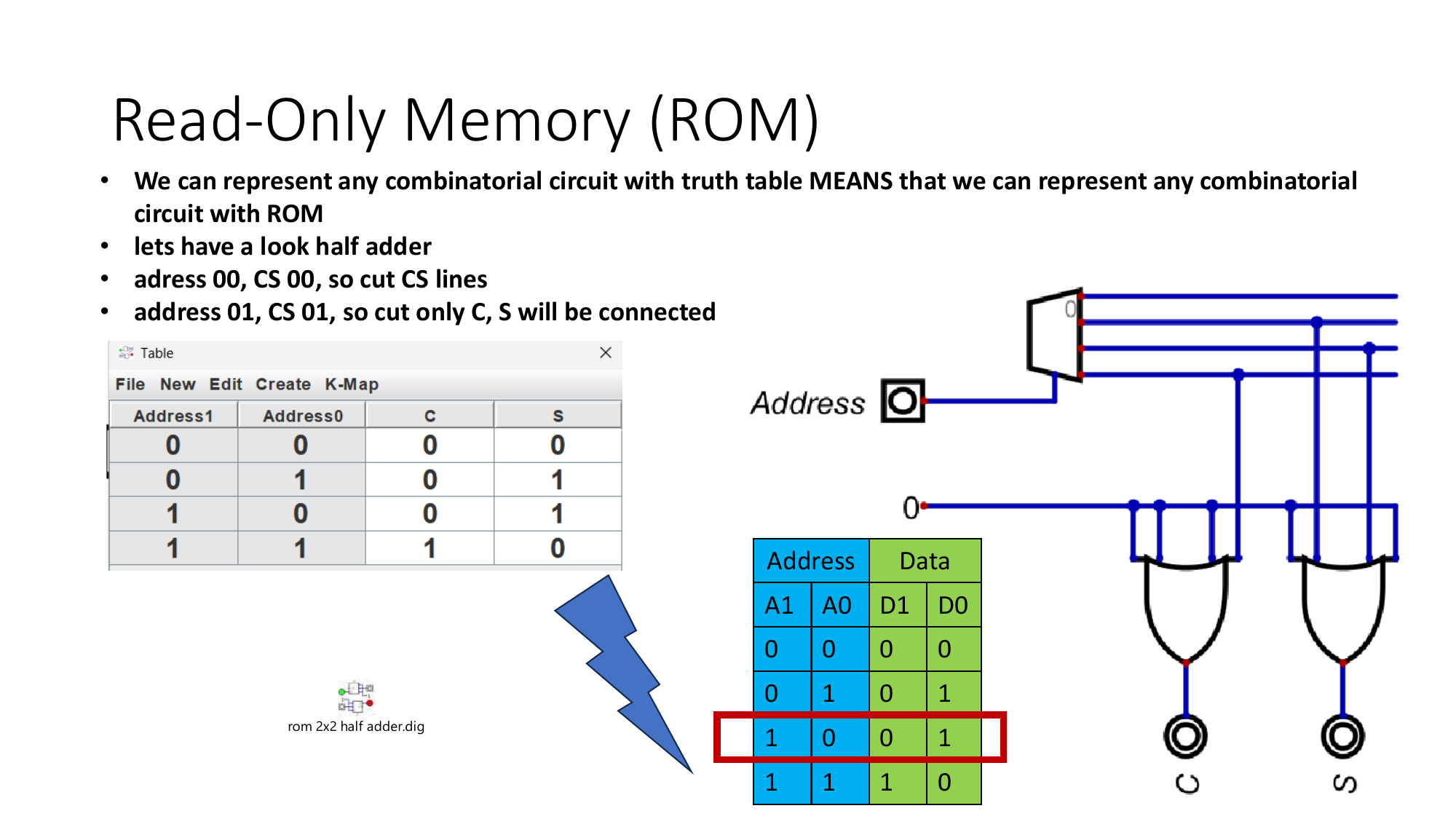
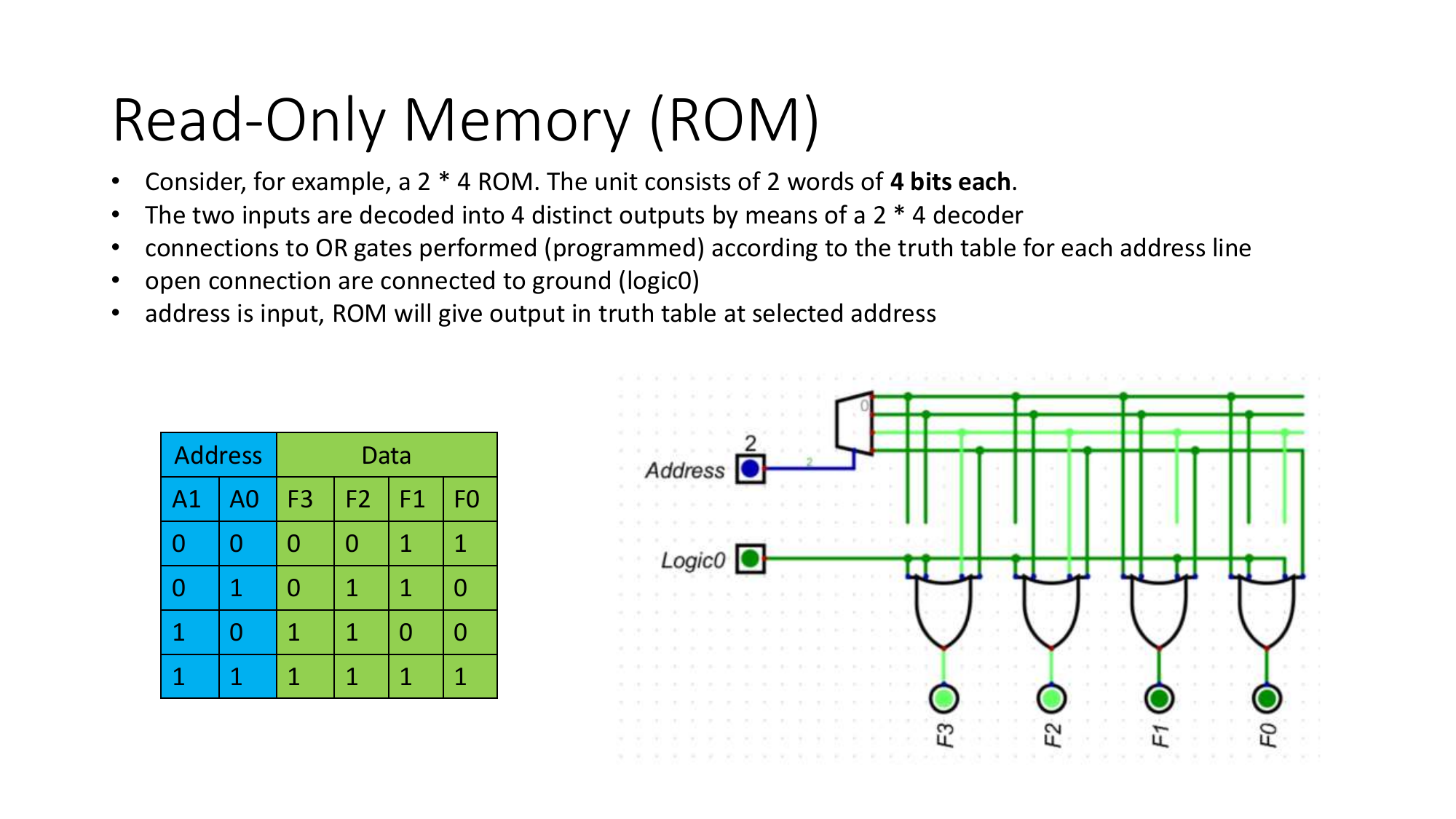
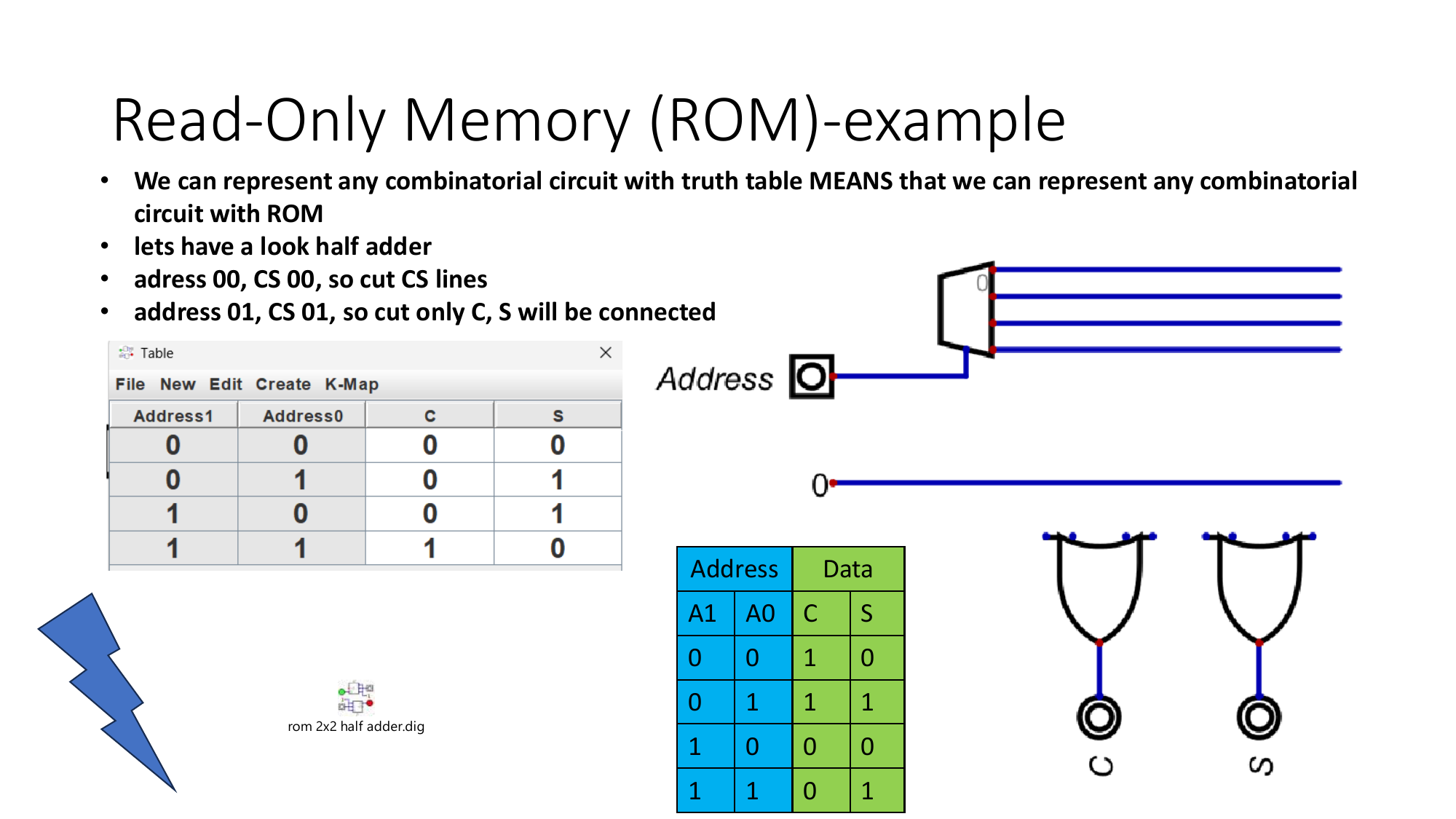
The “program” is literally which row-to-column wires are present.
From hard-wired to flash
In a classic ROM those connections are hard-wired at manufacture, so the contents can never change. Modern memory replaces each fixed wire with a transistor you can switch on or off electrically: that is EPROM (erased with UV light), then flash, which you erase and rewrite in place. Same decoder-and-array idea, programmable connections.
ROM is a lookup table
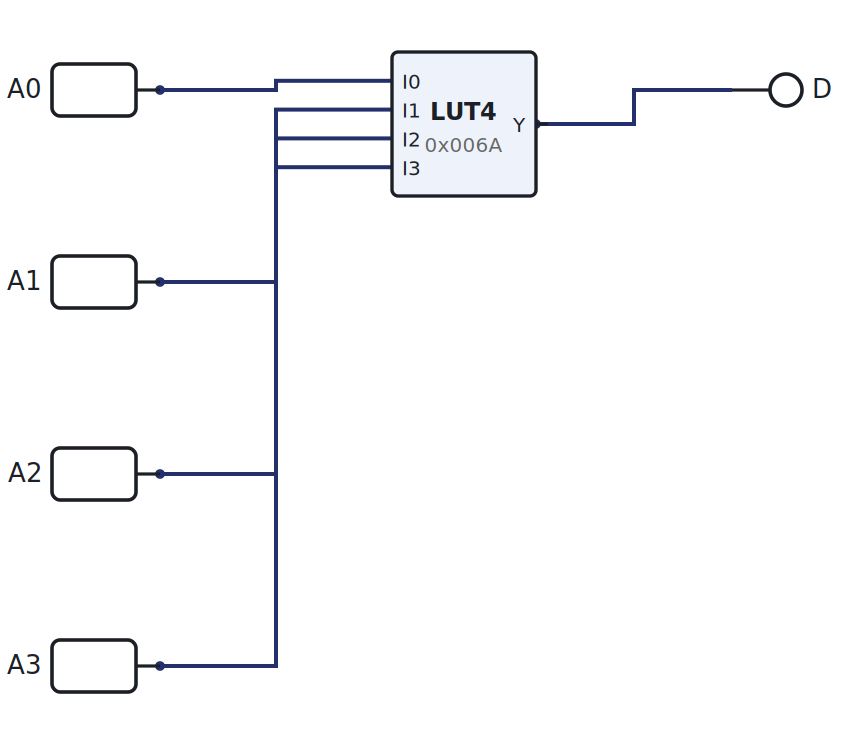
A small ROM is exactly a lookup table. LogicLab’s LUT4 is a 16-entry, 4-input ROM whose contents you set as a hex value, so you can address it with switches and read the stored bit.
RAM as a grid of registers
Random-access memory is a grid of 1-bit storage cells, addressed by row and column, that you can both read and write. Think of it as a block of registers with an address decoder choosing which one is connected to the data lines.
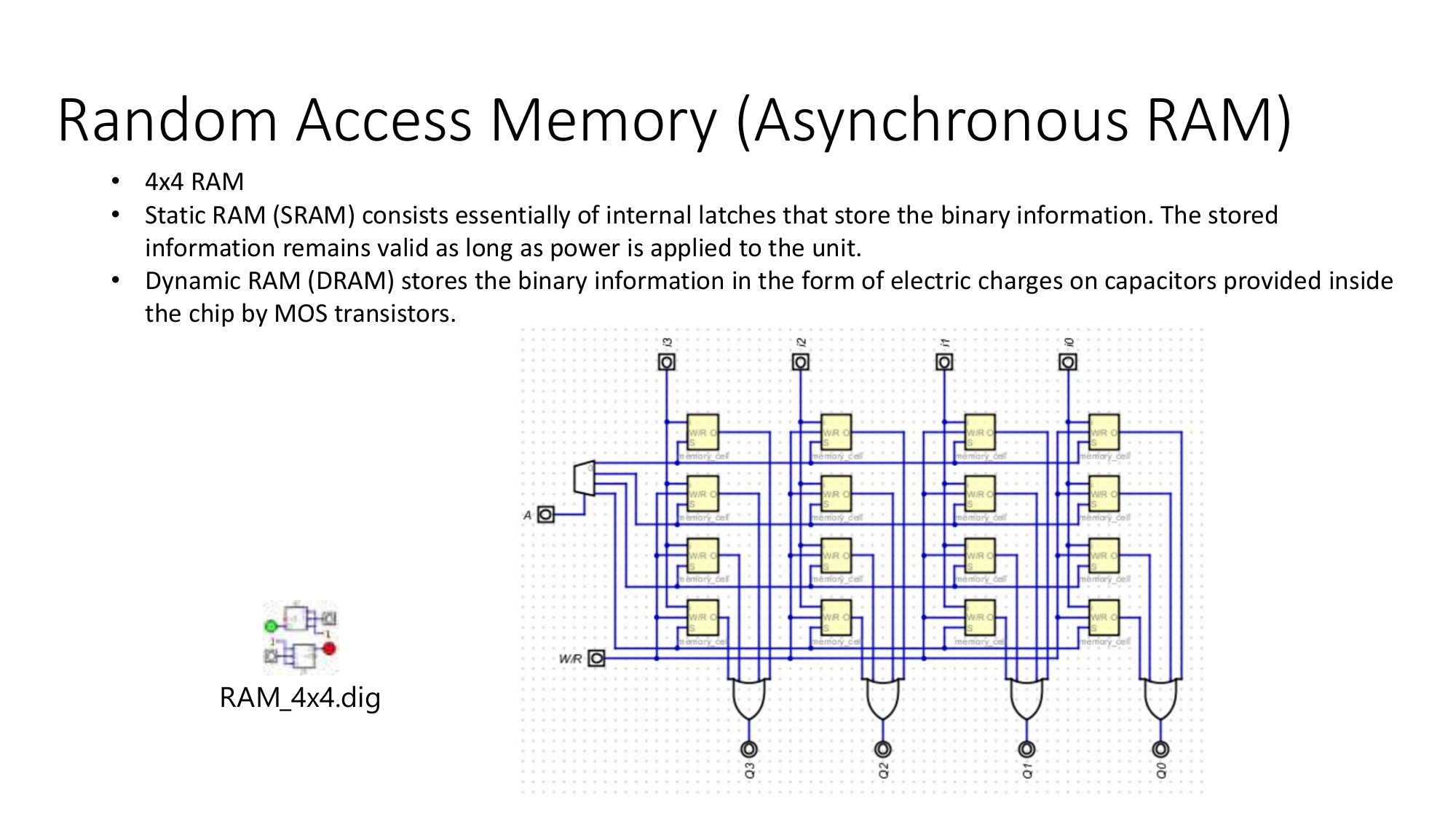
Asynchronous RAM responds as soon as the address settles; synchronous RAM latches the address on a clock edge, like the registers from last week.
The MCU’s two memories
The Week 14 MCU uses a ROM to hold its program (the program counter walks its addresses) and a RAM to hold data the program reads and writes. You have now built both.
Try it yourself (optional)
Wire a tiny ROM as a 2-to-4 decoder feeding OR gates for a 2-bit output, set a pattern, and read each address from the Arduino. See the Lab Annex.
Check yourself
- A ROM with a 4-bit address and an 8-bit word stores how many bits in total?
- What hex value loads into a LUT4 so it outputs 1 only at addresses 0, 5, and 15?
- What does RAM have that ROM does not, and what circuit provides it?